Monday Apr 13, 2026
58. Bells During the Eucharistic Prayer
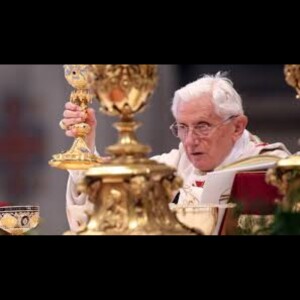
Today’s Catholic Massterclass will focus on the use of bells during the Eucharistic Prayer. The GIRM provides this instruction: A little before the consecration, when appropriate, a server rings a bell as a signal to the faithful. According to local custom, the server also rings the bell as the priest shows the host and then the chalice (GIRM, no. 150).
Two simple points about this: first, it is optional, not required, to use bells just before the consecration (often interpreted as the epiclesis) and at the elevation of the Sacred Host and Chalice after the gifts are consecrated; second, the common practice when bells are used is that there is one ring at the epiclesis and three rings at each of the elevations. A smaller number of parishes also ring the bell one time immediately after the priest consumes the Body and Blood of the Lord.
The purpose of the bells comes from traditional liturgies when the Mass was offered in a language other than the vernacular (the common language of the people in any given location), mostly in Latin. The Traditional Latin Mass (TLM) was offered in Latin, of course, but also with the priest facing the same direction as everyone else (ad orientem), which made it more difficult for people to hear and see what was happening at the altar. What’s more, the priest was speaking quietly, so often the only people who could hear anything were the altar servers. The servers would ring the bells at those times which were most worth paying attention to, namely the calling forth of the Holy Spirit on the gifts, the moment when the people had a chance to adore Jesus in the Eucharist, and at the completion of the sacrifice. The ringing of the bells helped people to be drawn toward the altar when they were perhaps focusing on some other prayers or meditations. Today, even though Mass is often offered in the common language and with the priest facing the people (versus populum), the bells are still helpful because humans still tend to get distracted at inopportune times. They can help to call our minds back to the present moment to focus on the only truly important thing taking place, which is the worship of God ordained by Jesus.
No comments yet. Be the first to say something!